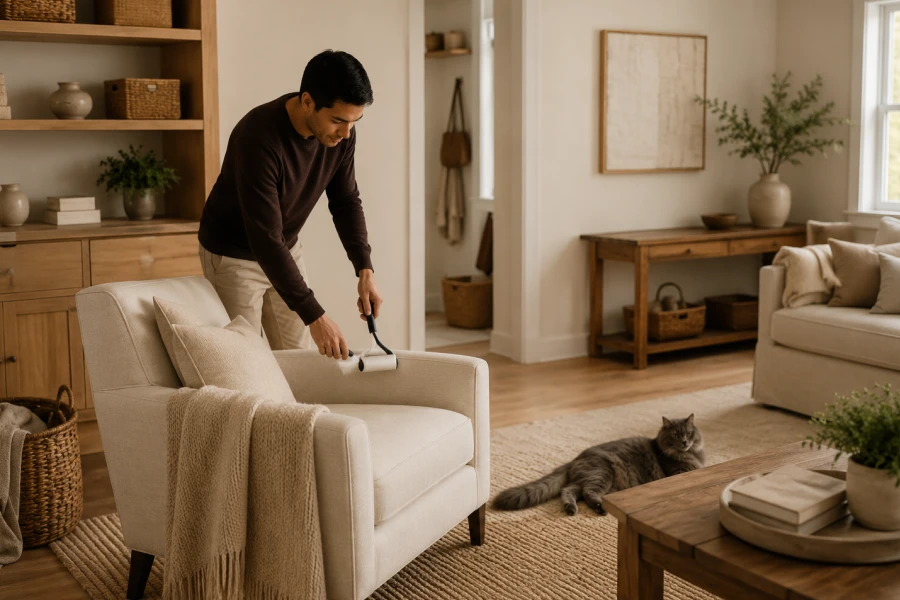
Many homes feel messy because cleaning happens too late. Loose fur gathers quietly before anyone notices it. Fur control cleaning methods work best when they match everyday movement. You do not need to schedule a complete reset daily. You need a few well-timed interruptions. Those moments prevent hair from settling deeper into fabric. They also protect your free time. A practical system follows the household’s natural rhythm. Once the timing feels right, cleaning becomes less of a negotiation.
Think about where people and pets move most often. Those pathways reveal the right moments to clean. A hallway may need a fast sweep after walks. A sofa may need attention before evening relaxation. The kitchen floor might collect more than the bedroom. These patterns are more useful than a rigid schedule. Start with the room that irritates you first. Build one short habit around that place. Repetition makes the task automatic. Over time, the home looks maintained without constant effort.
Evenings can easily become the messiest part of the day. Everyone arrives home with less energy and more distractions. Choose one five-minute reset before dinner or television. Pick up pet toys and smooth the main seating area. Use a quick vacuum only where the hair is visible. Pair this with dog hair removal tips and upholstery fur removal when shedding becomes more noticeable. Keep the standard simple enough to repeat. A short reset protects your evening from turning into a cleaning session. It also makes mornings feel easier.
Hair often gathers in places people overlook. Look behind furniture, under dining chairs, and along baseboards. Check corners near windows where air movement collects debris. Pet beds can spread hair farther than expected. Blankets also transfer it from room to room. These hidden areas need occasional attention, not daily panic. Mark them for your weekly reset instead. Small apartment homes benefit from clearing them more often. Once you know the hotspots, you can act before they become visible. That is the difference between maintenance and catch-up cleaning.
Small homes can feel cluttered faster because every surface is close. That does not mean they require constant work. It means the cleaning plan needs clearer priorities. Keep pet grooming supplies contained in one zone. Store blankets where they can be washed easily. Choose furniture fabrics that tolerate frequent care when possible. Try small apartment pet cleaning habits that focus on floors, fabrics, and entry points. Avoid spreading supplies across every room. A compact setup feels calmer and is easier to maintain. Good systems make a small home feel more spacious.
Floors often show the first signs of pet life. Hair collects along edges and beneath furniture legs. Rather than vacuuming everything daily, focus on visible lanes. Use a soft brush or compact vacuum for these areas. Save full-floor cleaning for your chosen reset day. This approach keeps the task proportional. It also prevents cleaning fatigue. Try a mat near doors to catch outside debris. Shake it regularly before dirt moves inward. Simple floor habits make the entire room appear cleaner.
Cleaning often sounds like a large commitment. Resetting sounds shorter, gentler, and more achievable. A reset might mean clearing the sofa, brushing a pet bed, and wiping bowls. It does not require rearranging closets or washing every floor. That distinction helps you start sooner. It also removes the feeling that one missed day ruins everything. Use a reset to maintain the room between deeper cleans. Then save bigger jobs for a predictable time. This approach supports consistency without demanding perfection. Your home benefits from frequent care rather than occasional exhaustion.
A weekly reset becomes easier when daily habits already support it. You will spend less time moving piles and searching for supplies. Wash pet bedding on the same day each week. Vacuum the places where your pet rests longest. Wipe feeding zones before residue becomes stubborn. Include weekly pet home reset steps that fit your actual schedule. Keep the list short enough to finish. Completion matters more than adding unnecessary tasks. A finished hour feels far better than an abandoned afternoon.
Shared rooms need a different level of attention. They support meals, conversations, relaxation, and visitors. Choose flexible storage for pet toys and accessories. Keep a washable throw over the pet’s favorite spot. Use furniture covers when shedding increases. Make a quick visual check before settling in each evening. These small decisions keep the room ready for real life. They also reduce the need for sudden cleaning before guests arrive. A shared area should feel lived in, not difficult. Thoughtful maintenance keeps it both welcoming and practical.
Some days will not include any cleaning at all. That is normal and expected. A helpful system gives you an easy way back. Start again with the most visible problem. Do not try to repair the entire house at once. Clear one surface, one floor area, or one pet zone. The momentum will often return naturally. Keep your supplies accessible for these moments. Consistency grows through restarting, not through never slipping. Your routine succeeds when it can survive a busy life.




Leave a comment