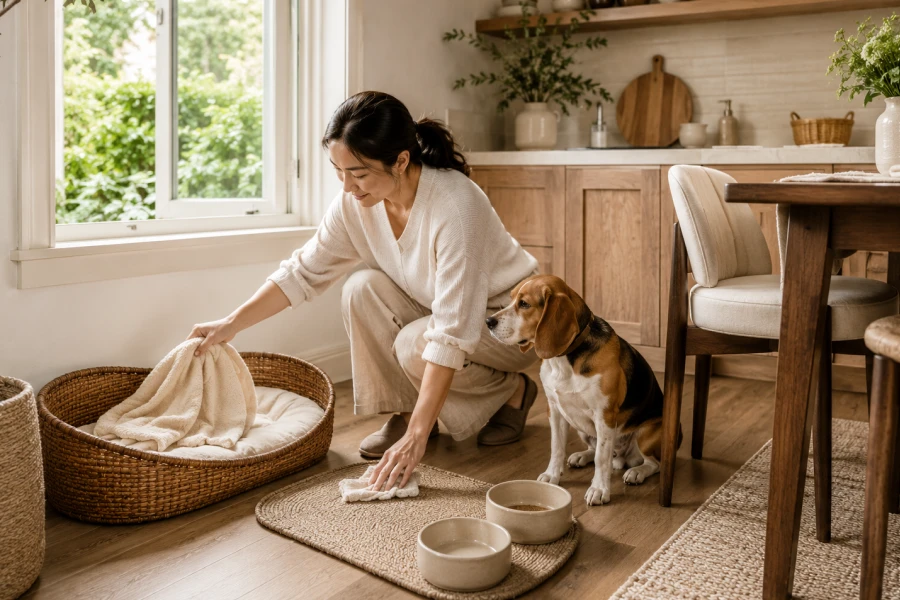
Odors usually become noticeable after they have settled in. They cling to soft surfaces, feeding areas, and forgotten corners. Pet odor control at home works better when it becomes a simple habit. The goal is not to fill rooms with fragrance. It is to keep the environment feeling fresh and breathable. A few thoughtful actions can prevent lingering smells. They also make cleaning feel less urgent. Start with the sources that return most often. Then build a calm response around those spaces.
Covering a smell rarely solves the actual problem. Start by identifying where the odor appears strongest. Check pet bedding, fabric furniture, litter zones, and food areas. Notice whether the issue returns after feeding or outdoor time. This information helps you choose the right response. A washable blanket may need frequent rotation. A feeding mat might need daily attention. Airflow can change how odors travel through rooms. The more specific your observation becomes, the easier cleaning feels. Clear information prevents random product buying.
Food spaces can quickly become sticky or stale. Wipe spills as soon as you see them. Rinse bowls before residue dries around the edges. Wash feeding mats on a predictable schedule. Keep dry food containers sealed between meals. This is also where pet mess prevention becomes especially valuable. A small tray can keep water splashes contained. Use washable materials whenever possible. The area stays fresher when crumbs and moisture do not linger. These steps take minutes but make a noticeable difference.
Soft fabrics hold more odor than smooth surfaces. Focus on pet beds, blankets, cushions, and frequently used throws. Rotate washable layers before they become heavily scented. Vacuum fabric furniture gently between washes. Let removable covers air out after cleaning. Choose a regular laundry day for these items. It helps to keep one backup blanket available. That way, your pet stays comfortable while the other layer is washed. Clean fabric changes the mood of a room quickly. It also makes the home feel more inviting without artificial fragrance.
Pet-specific zones deserve a routine that feels easy to repeat. Clear waste, loose hair, and nearby debris before the area feels overwhelming. Wipe surrounding surfaces with pet-safe care in mind. Keep cleaning supplies near but out of reach. Use cat litter area cleaning and pet dander reduction habits that address both visible mess and the air around it. Replace or wash nearby mats regularly. Check whether ventilation reaches the space. A cleaner zone reduces the chance that odor spreads elsewhere. Regular care feels much easier than a sudden deep clean.
Strong scents can make a room feel heavier rather than cleaner. Aim for neutral freshness instead of perfume. Open windows briefly when weather allows. Remove the items holding odor before adding anything new. Wash washable fabrics instead of masking them. Wipe smooth surfaces where residue collects. Let rooms dry fully after cleaning. Fresh air works best alongside clean materials. A calm home does not need to smell artificial. It simply needs fewer places for odor to settle.
Air movement changes how a room feels almost immediately. Open doors between rooms when possible. Move pet beds away from damp or stagnant corners. Avoid trapping fabrics behind large furniture pieces. A fan can help circulate air after cleaning. Keep pathways clear around windows and vents. This supports a fresher result without extra products. It also makes rooms feel less closed in. Better airflow can highlight areas that still need attention. That awareness helps you refine your routine over time.
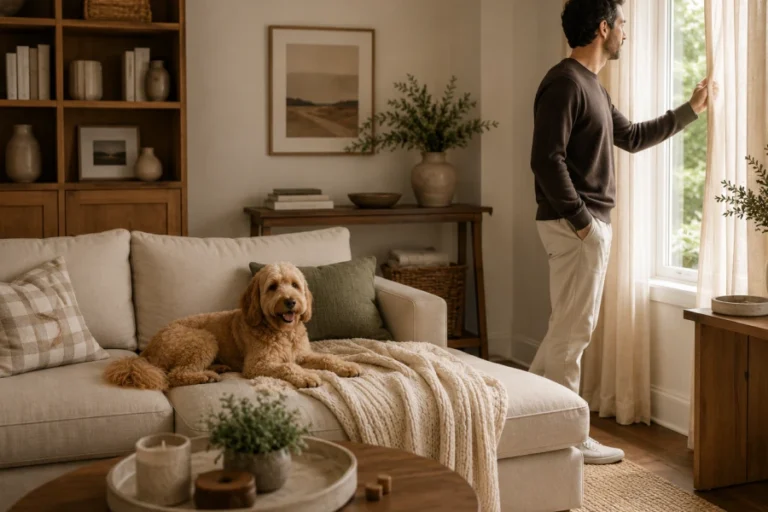
You do not need a full cleaning session before every visit. Focus on the areas people notice first. Refresh the entryway, main seating area, and pet zone. Remove visible fur from cushions and floors. Empty trash before it starts holding odor. Check feeding areas for crumbs or dampness. A quick room-by-room scan is often enough. Put toys into one easy storage basket. Let the space breathe for a few minutes. Guests notice comfort and care more than perfection.
Weekly care handles the tasks that daily habits cannot cover. Wash pet bedding and clean favorite resting places. Vacuum under furniture where hair and dust collect. Check corners around litter boxes or feeding stations. Replace worn mats before they hold stubborn residue. Use room-by-room pet cleaning to keep the work focused rather than scattered. Add one overlooked space each week. A steady rotation prevents the whole home from becoming a project. The result is fresher rooms with less effort. That rhythm is easier to keep through changing seasons.
Your pet’s habits can change over time. Seasonal weather may create new challenges. A new rug or furniture arrangement can also shift odors. Let your cleaning pattern respond to those changes. Keep what works and release what does not. Notice the zones that need more frequent care. Adjust the timing rather than adding endless tasks. A useful routine should feel supportive. It should help you enjoy your home with your pet. That is what makes it sustainable.


Leave a comment