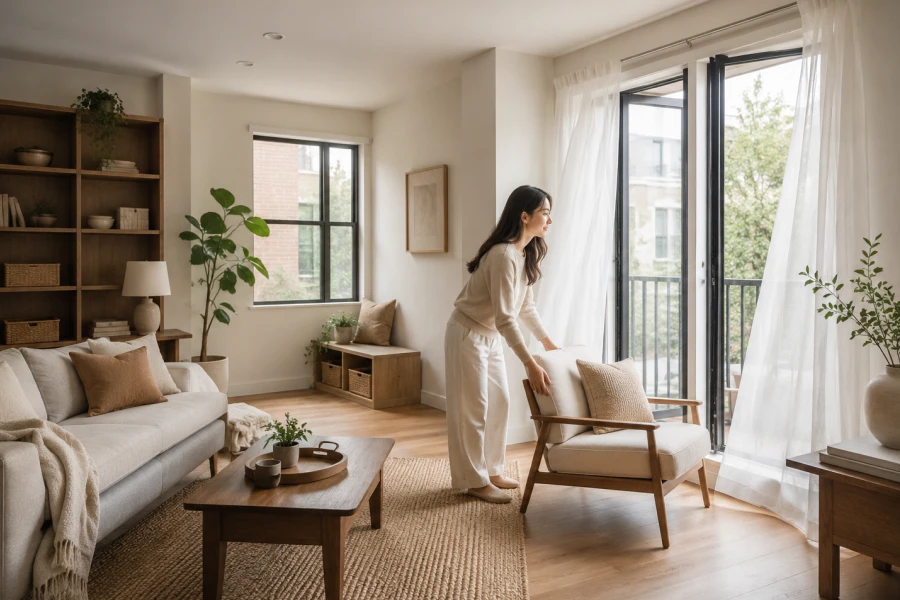
Airflow can change how an apartment feels within minutes. A room may look clean yet still seem heavy. Learning how to improve airflow in an apartment starts with noticing where air stops moving. Closed doors, blocked windows, and crowded corners all play a role. The good news is that small adjustments can help. You do not need to redesign your home. You need to create better paths for air to travel. Once those paths are clear, the space feels more comfortable. The result is a home that feels easier to inhabit.
Start by walking slowly through each room. Notice where the air feels still or warm. Look for furniture pressed against vents or windows. Check whether doors stay closed all day. Observe where clutter creates tight passages. These details reveal the barriers to better circulation. Choose one blockage that is easy to change. Move a chair, open a door, or clear a windowsill. Small changes create useful information quickly. You can build your plan from what actually improves the room.
Interior doors can either help or limit circulation. Open them when privacy is not needed. Keep hallways free from large storage pieces. Let air travel from brighter rooms into darker ones. Avoid placing tall furniture directly across doorways. A simple pathway can improve the feeling of several rooms. Use room-by-room air refresh and seasonal ventilation planning to decide which doors and windows matter most. The goal is not to create a draft. It is to make the home feel less stagnant. Flow works best when the path stays uncomplicated.
Windows do more than bring in light. They create the easiest opening for a room to reset. Keep sills clear enough to open without effort. Move heavy curtains aside when you want circulation. Avoid blocking windows with storage boxes or tall plants. Open nearby interior doors to extend the effect. Let the room air out after cooking, cleaning, or showering. Close windows again when comfort requires it. A short window habit can still make a difference. The important part is using the opportunity regularly.
Air cannot feel fresh when materials hold onto moisture and odors. Check blankets, rugs, towels, and laundry baskets first. Wash or air out the pieces used most often. Remove cardboard and piles from corners where air already feels trapped. Keep damp items from staying on furniture. A clearer room is easier for air to move through. It also feels more open visually. You may notice that one decluttered corner changes the whole atmosphere. Clean pathways support both airflow and comfort. Small material changes can have a surprisingly large effect.
Bathrooms hold moisture longer than most rooms. Open the door after showering when it makes sense. Use available ventilation before steam spreads. Hang towels so they can dry fully. Wipe wet surfaces before moisture becomes trapped. Remove damp bath mats from the floor when needed. A quick check later in the day can prevent lingering heaviness. Keep storage from crowding the room. These habits support a fresher bathroom without adding much work. Moisture control protects the comfort of nearby rooms too.
Kitchens benefit from attention before odors fill the home. Start airflow before heating pans or boiling water. Keep lids on foods that create strong steam. Wipe countertops after meals. Empty food waste before it sits overnight. Let cookware dry completely after washing. Open a nearby window when conditions allow. These steps reduce the work your apartment must do later. Better circulation makes the kitchen feel easier to use. It also keeps the smell of dinner from becoming tomorrow’s atmosphere.
A daily check does not have to feel formal. Notice the air when you first enter a room. Ask whether the space feels open, damp, or stale. Then choose one useful action. Open a window, move laundry, or clear a vent. Keep the response small and immediate. Use apartment air troubleshooting when one room repeatedly feels uncomfortable. The goal is to respond before the issue grows. Tiny corrections keep your home easier to maintain. Awareness becomes the habit that supports every other habit.
It is tempting to search for a single product solution. Often, the better first move is changing what already exists. Wash the textiles that hold odor. Rearrange furniture that blocks pathways. Remove clutter from windows and vents. Create space around doors. Dry damp items promptly. These actions cost little and reveal what the home truly needs. They also make later purchases more intentional. A simpler space gives you better information. The strongest improvement may already be within reach.
Every apartment has different strengths and limits. A studio needs different habits than a two-bedroom space. Pay attention to the rooms that connect most often. Notice which windows create the best reset. Work with your actual layout rather than fighting it. Keep the actions short enough to repeat. A routine becomes durable when it feels natural. Let comfort be the measure of success. Small improvements add up through the week. Better airflow is less about perfection than responsive care.


Leave a comment